
Sizing
Fit starts with measurements.
Bridal sizing varies by designer, collection, and year. The most useful way to evaluate a sample gown is to compare your body measurements to the listing details—not the size you usually wear in everyday clothing.
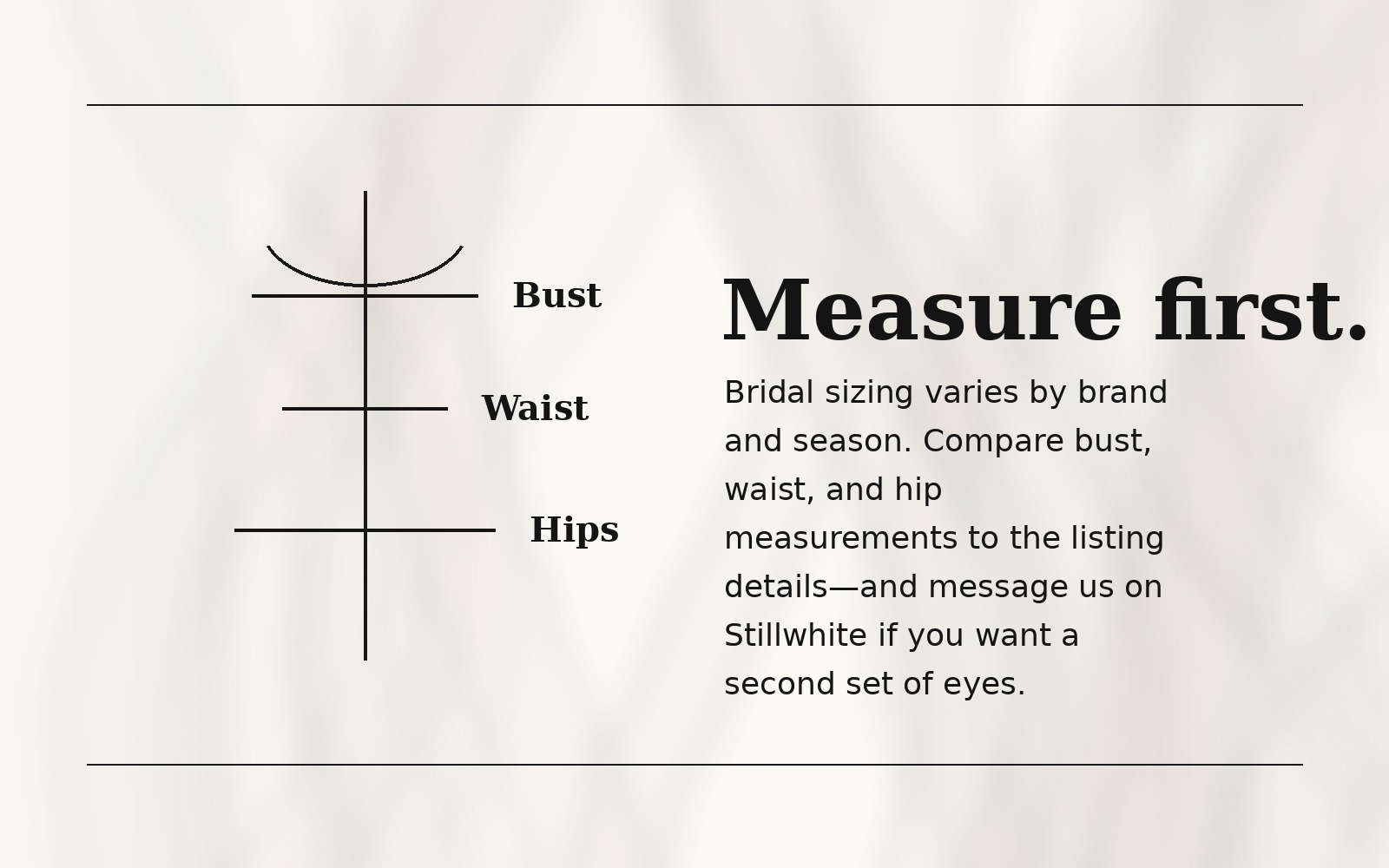
How to measure
Use a soft measuring tape and keep it level.
Bust
Measure around the fullest part of your bust while keeping the tape level across your back.
Waist
Measure the narrowest part of your natural waist, typically above the belly button and below the ribcage.
Hips
Measure the fullest part of your hips and seat, keeping the tape parallel to the floor.
Helpful details to send
If you want a second opinion, message us on Stillwhite.
- Your bust, waist, and hip measurements
- Your height with the shoes you expect to wear
- Your wedding date, if timing matters
- Any known alteration needs or previous bridal sizing experience
What if I am between sizes?
That is common in bridal. Prioritize the measurement that matters most for the silhouette, then plan around alterations if needed.
Are alterations normal for sample gowns?
Yes. Most brides expect some tailoring, especially for length, straps, or small fit refinements.
Is bridal sizing the same as street sizing?
Not consistently. Measurements matter more than the printed size alone.
Can you help me think through a listing?
Yes. Send a Stillwhite message with the gown you are considering and your measurements, and we will help where we can.